DIY Barefoot Sandals: How to Make Ultralight Sandals in 4 Steps (140 g)
Want barefoot sandals, that weigh just 140 g (5 oz) and cost about $21? You have two options: make them yourself with this 4-step guide (the video shows how, plus a comparison with ready-made sandals), or go for ready-made barefoot sandals – you’ll find a comparison of alternatives from 73 g and $9 below.
⚡ Barefoot sandals: make or buy?
- 140 g
Total weight of the pair in size EU 40–41 (Comfort sole).
- about $21
Buy the materials separately, or as a ready DIY barefoot sandal kit.
- 4 steps
Trace your foot, cut out the sole, seal and thread the strap, tighten.
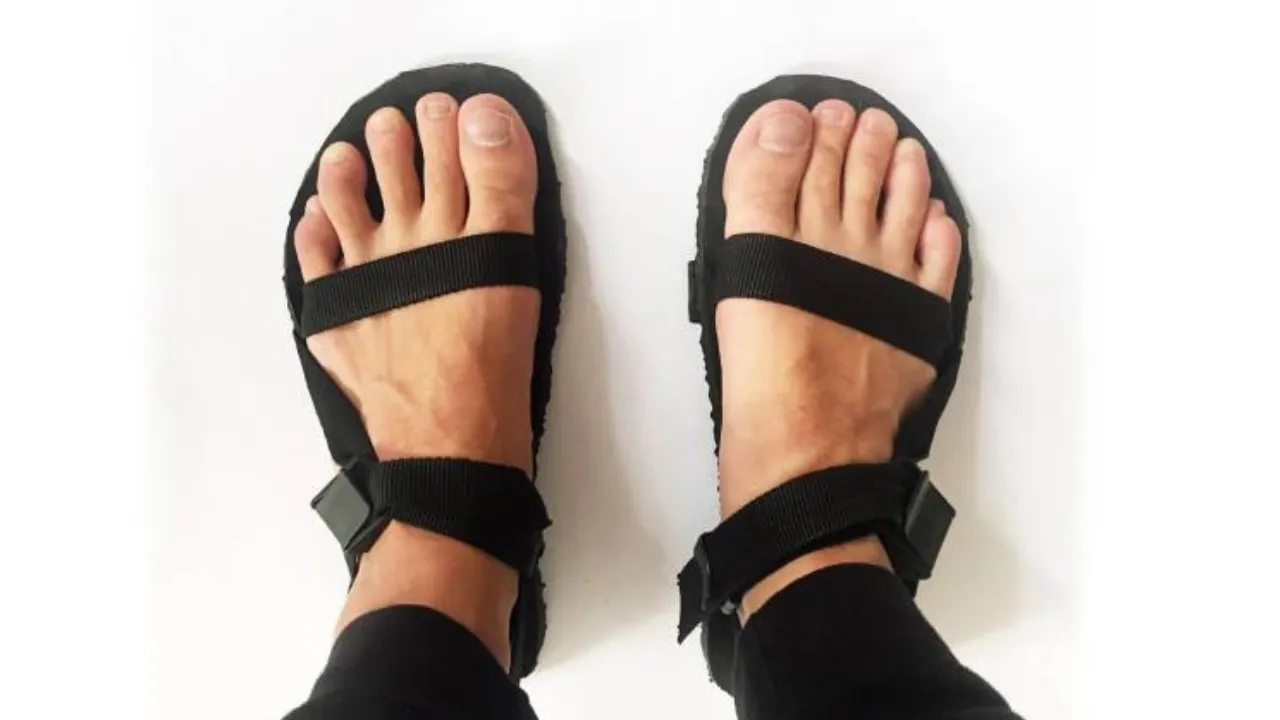
- Strap over the toes
No toe post between the toes – you can even wear them with socks.
- Or ready-made sandals
Don’t feel like making them? Comparison of ready-made barefoot sandals – foldable camp shoes, Decathlon, Xero Shoes and Bosky.
🤔 Why these barefoot sandals?
You’ll use them most as secondary travel footwear, an addition to heavier boots – but they work just as well anywhere else as full-fledged sandals. Just follow this barefoot sandal guide.
Barefoot – a type of footwear with countless benefits
- thanks to the thin sole, your foot gets as close as possible to natural walking, which strengthens it and supports its natural function – your foot uses its full potential
- foot activity affects the muscle chains of the whole body, which influence the spine and more
- more use of the big toe – prevention of flat feet
- cushioning the strain on hips and knees
- the sole wears out fast? That’s not entirely true – thanks to the thin sole you cushion each step with your foot and walking is gentler, unlike the classic stomping in heavy boots like on a military parade. So the sole doesn’t wear out as much.
Strap over the toes
- without a toe post they’re more versatile
- you can wear them with socks! (your feet will love that in the evening by the fire after a full day in hiking boots)
- sandals tied this way just look better
Ultralight and ultra-cheap
- the sandals weigh just 140 g in size EU 40–41 (Comfort sole)
- you don’t carry any unnecessary weight, only the essentials
- you don’t waste money, just a relatively small amount
🎥 DIY barefoot sandals vs ready-made – video
🛠️ How I make them (video in Czech – the steps are visual)
🧰 Making barefoot sandals – what you need
DIY barefoot sandal kit
The easiest option is a DIY barefoot sandal kit (available in my Czech e-shop), or specifically:
- sole material – a shoemaker’s rubber sheet
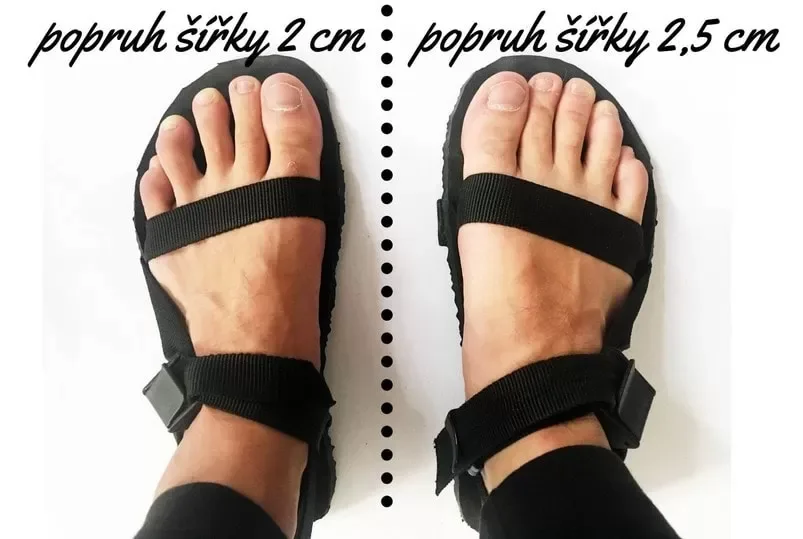
- smooth straps, 2 or 2.5 cm (¾–1 in) wide
- a hole punch (ideally oval)
- a lighter or a sewing machine
- a sharp thin knife (utility / carpet knife)
- a pen or marker to trace your foot
- a sheet of paper for the template, at least A4 / Letter
- plastic buckles to tighten the straps
DIY barefoot sandal kit 🛠️

The DIY barefoot sandal kit contains everything you need to follow this guide – the sole, straps and buckles. Custom-fit barefoot sandals at an unbeatable price.
Who it’s for: you want ultralight custom sandals as secondary travel footwear and don’t mind an hour of work.
Advantage: the lowest weight and price, and sandals shaped exactly to your foot.

Which strap and sole to choose for barefoot sandals?
Sole: in general, the harder and thicker, the more durable the sandals are and the longer they last. At first, though, they may not be as comfortable and it will take longer to adapt to your foot. The Comfort sole is 44% lighter than the Feel sole, so size 41 sandals weigh 140 g with the Comfort sole and 250 g with the Feel sole.
Strap: the same applies as for soles. As for width, a 2.5 cm strap holds the foot better. I also think it looks better, but that’s subjective – see the comparison in the photo below.
You’ll find the specific choice of soles in the DIY barefoot sandal kit.
👣 How to make barefoot sandals in 4 steps
1. Trace your foot
- trace your foot, holding the pen perpendicular to the paper
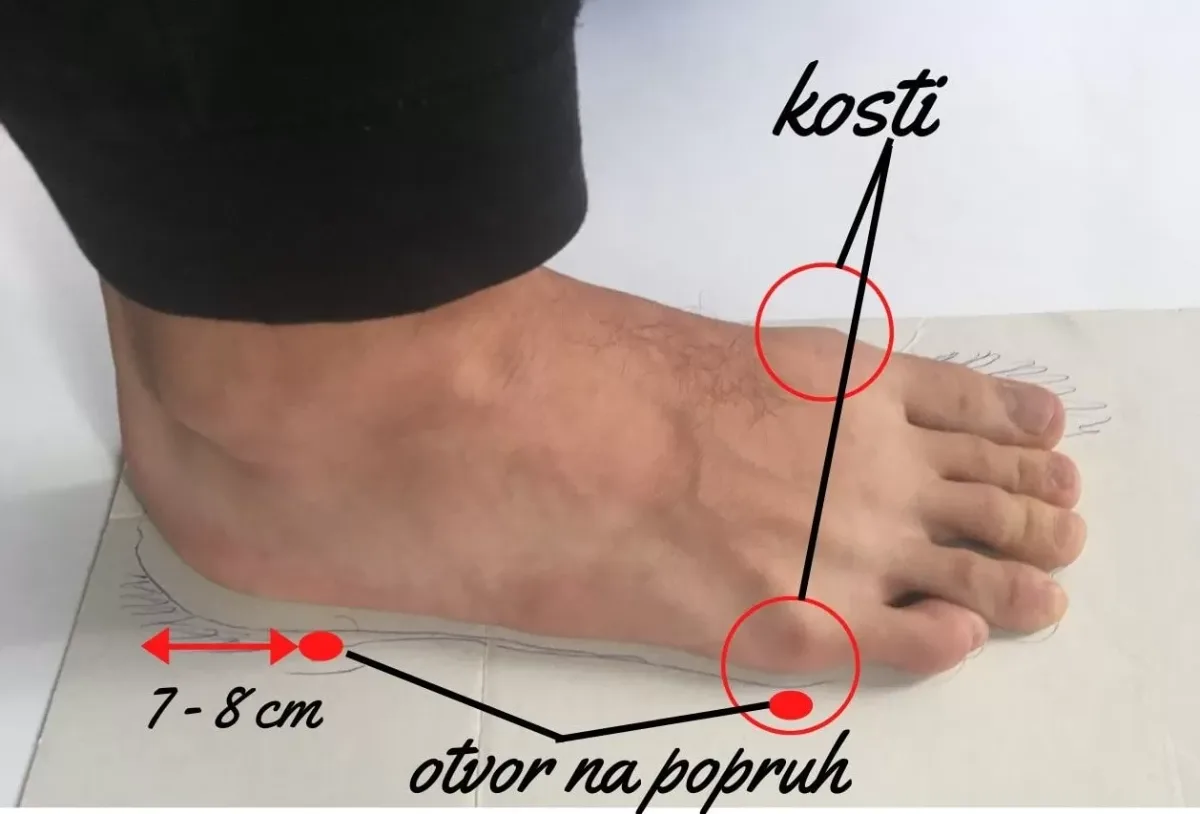
- mark the spots for the holes for the straps:
- the longer side of the oval must be parallel to the longer side of the sole
- mark the front holes level with the bones (or about 2 mm in front of them)
- the back holes 7–8 cm (about 3 in) from the end of the sole (the heel)
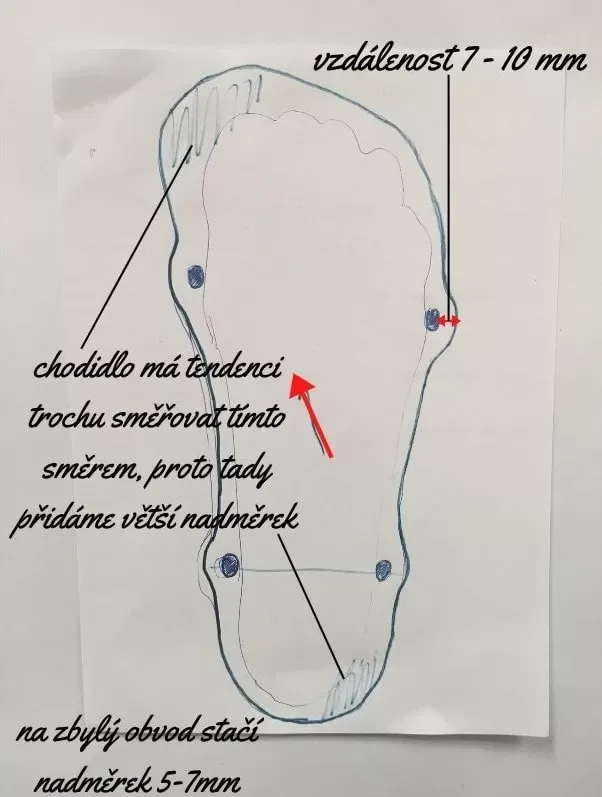
- draw the outline of the sole itself:
- copy the outline of your foot and add 5 mm everywhere except the exceptions below
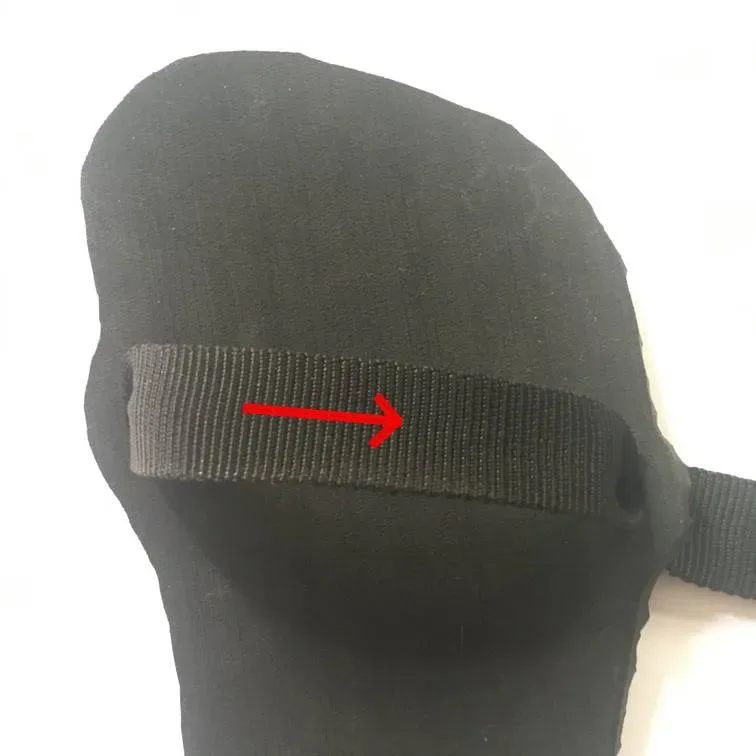
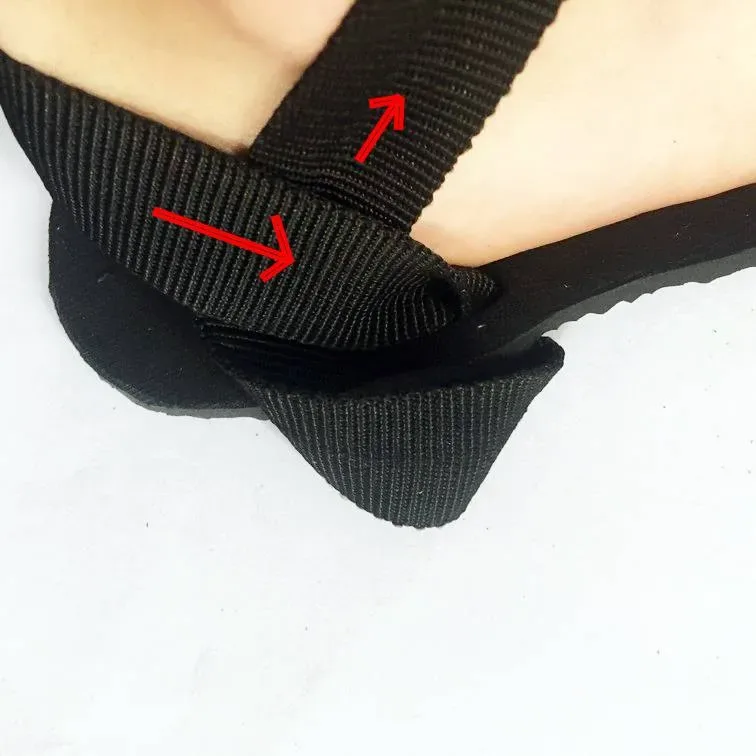
- you can add more on the outer side of the heel and the inner side of the big toe – with this tying, the foot shifts a little in the direction of the arrow in the second picture
- add more around the strap holes, at least 7 mm
2. Cut the template into the sole
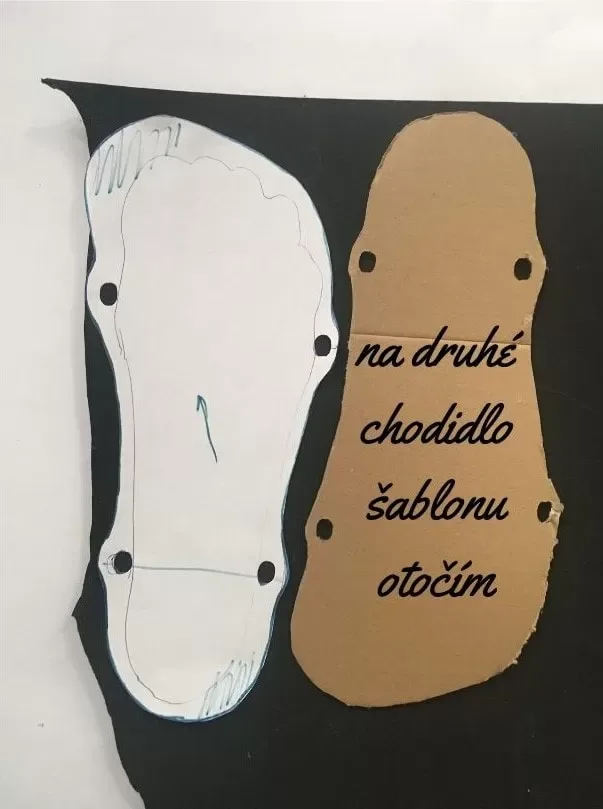
- transfer the template onto the sole including the holes
- for the second sandal you have to flip the template, so you get a left and a right one
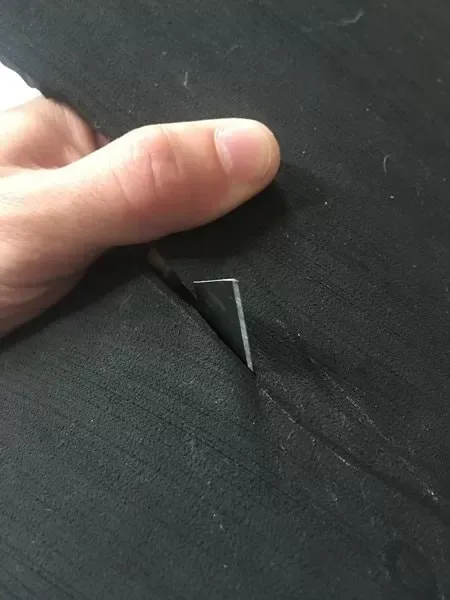
- cut out the sole, ideally with a sharp thin knife (utility knife, snap-off blade…)
- punch the strap holes
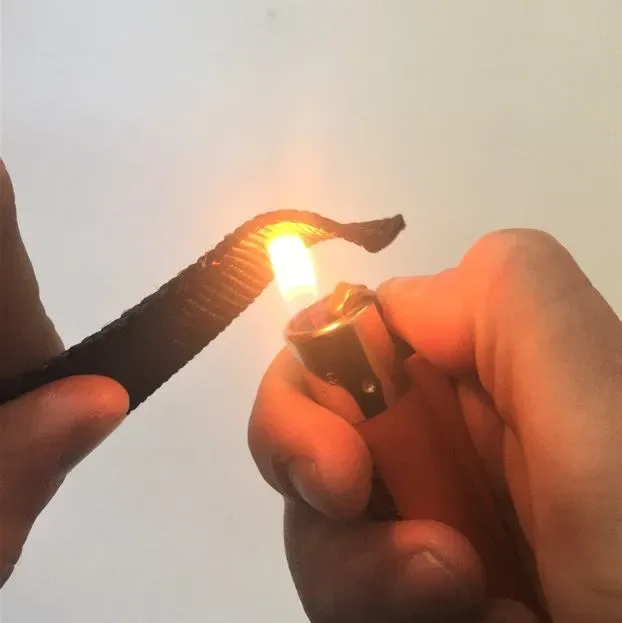
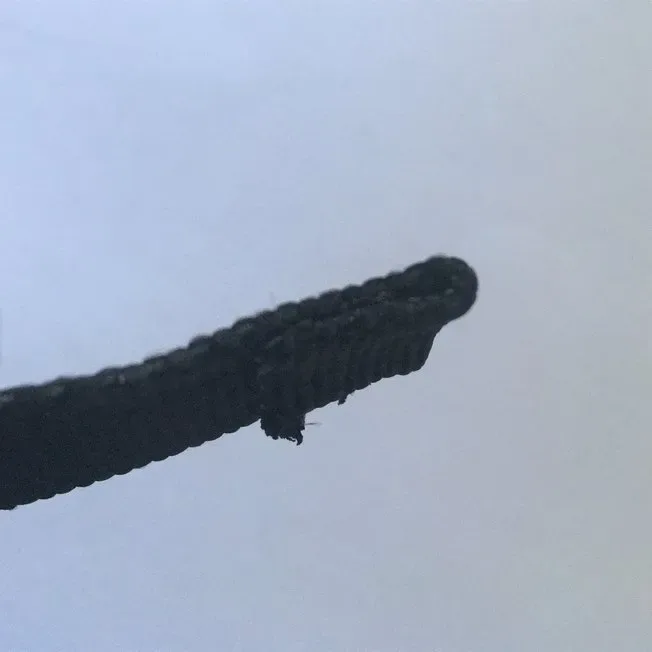
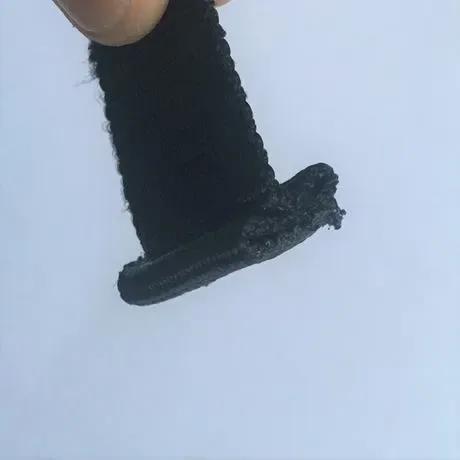
3. Seal the end of the strap and thread it through
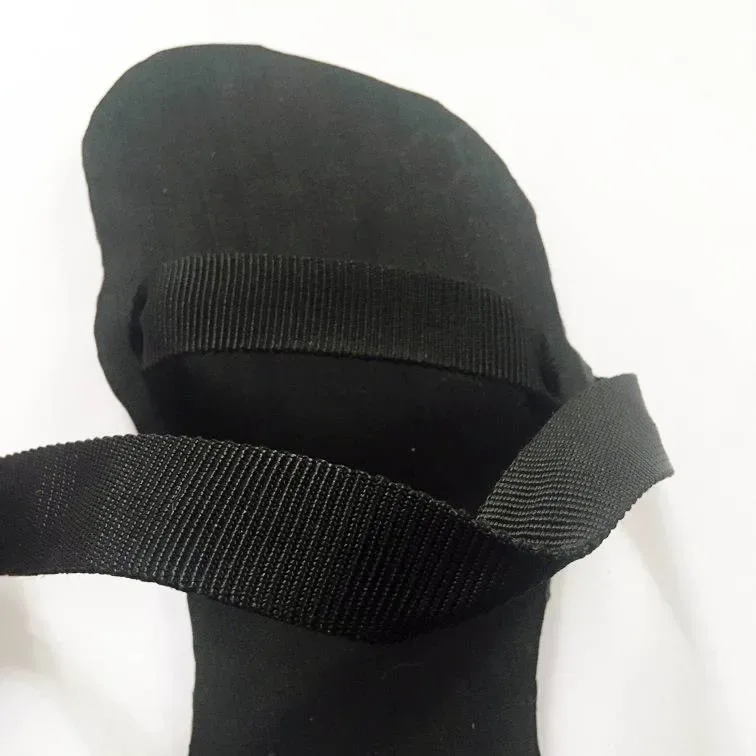
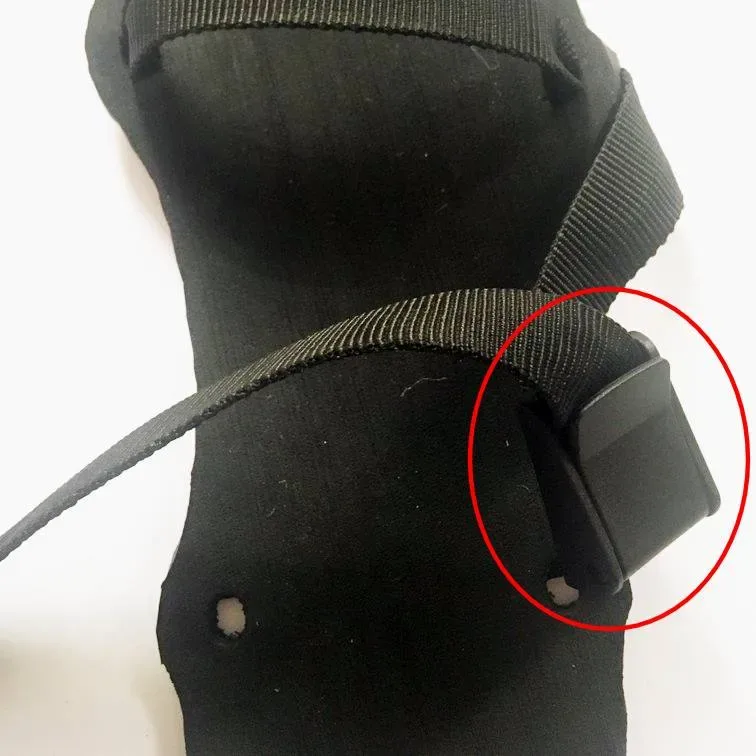
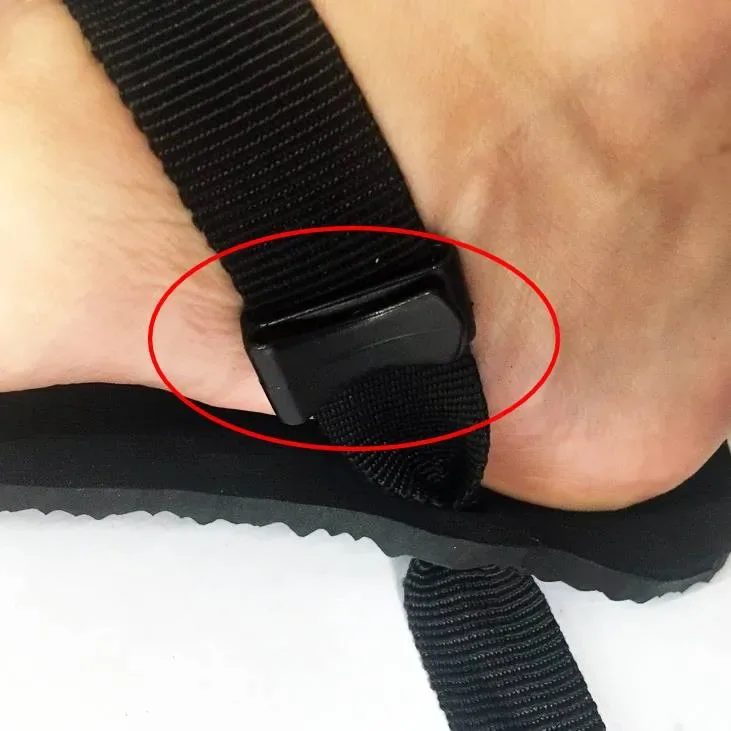
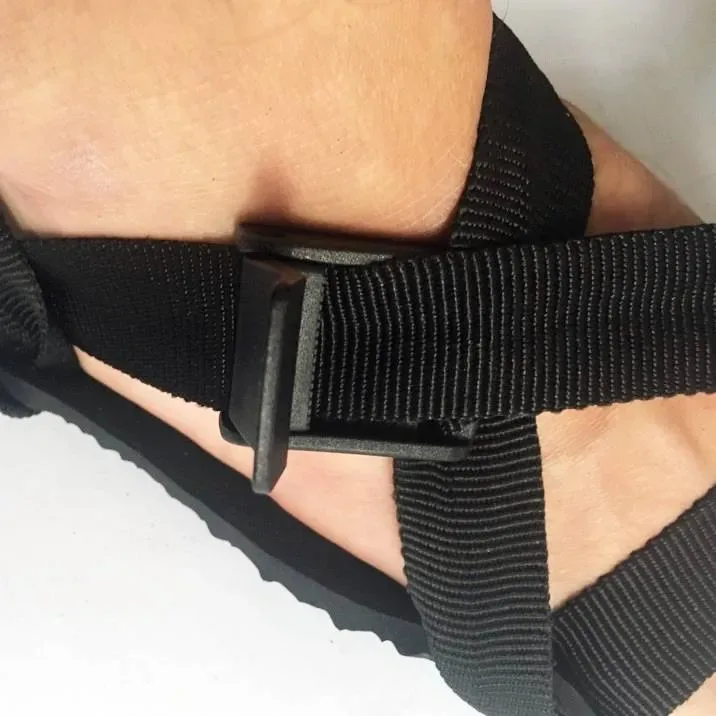
At the end of the strap, use a lighter or a sewing machine to make a T-shaped stopper, and thread the strap through the sole as shown in the photos:

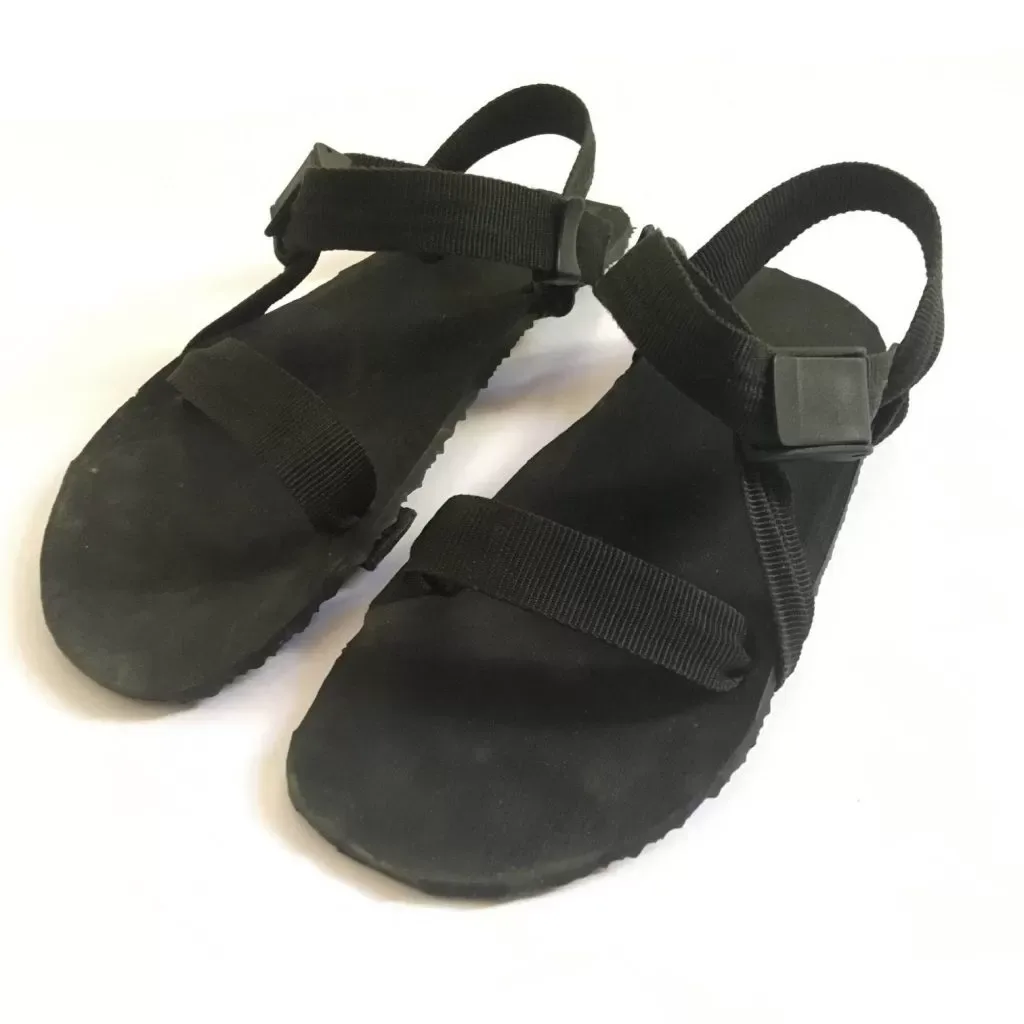
4. Done!
Tighten the straps to fit your foot. Over time the sandals adapt to your foot, depending on how stiff the straps and sole are. The tying may loosen a bit as the sandals adapt, so just tighten them again. Do it gently so you don’t tear the straps out of the sole.
🛒 Which barefoot sandals to buy? Ready-made alternatives
Don’t feel like making them? There are ready-made barefoot sandals too – from cheap foldable camp shoes to durable branded models that cost and weigh several times more. I’ve personally tested Bosky Shoes Performance Z-TECH and Y-TECH, and I wear one pair every day. Looking just for something to change into at camp? See my best camp shoes for backpacking.
| Sandals | Weight | Price |
|---|---|---|
| DIY (kit) | 140 g | about $21 |
| Foldable camp sandals | 73 g | about $9 |
| Decathlon MT 500 | 356 g | about $30 |
| Xero Shoes Z-Trek | 420 g | about $61 |
| Bosky Shoes Performance | 328–359 g | about $105–119 |
Foldable barefoot camp sandals 🩴

Foldable barefoot sandals weigh just 73 g and they’re cheap camp shoes, which fold flat and take up almost no space in your backpack.
They’re great for the campsite, hostels, trains and evening rest, giving your feet a break from heavy boots. The thin flexible sole keeps the barefoot feel and the non-slip bottom grips well.

MT 500 bivouac sandals (Decathlon) ⛺
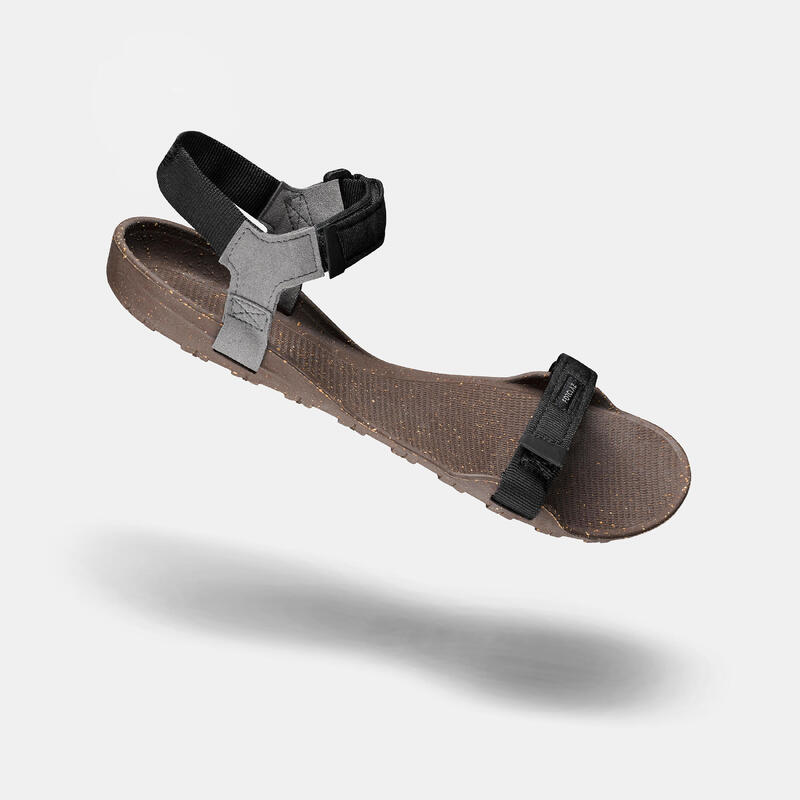
MT 500 bivouac sandals with a rubber sole from Decathlon are a cheap ready-made alternative for camping and bivouacs when you don’t want to make anything.
Who it’s for: you want cheap ready-made camp sandals and don’t count every gram.
Downside: about 2.5× heavier than the DIY version.
Xero Shoes Z-Trek 🥾

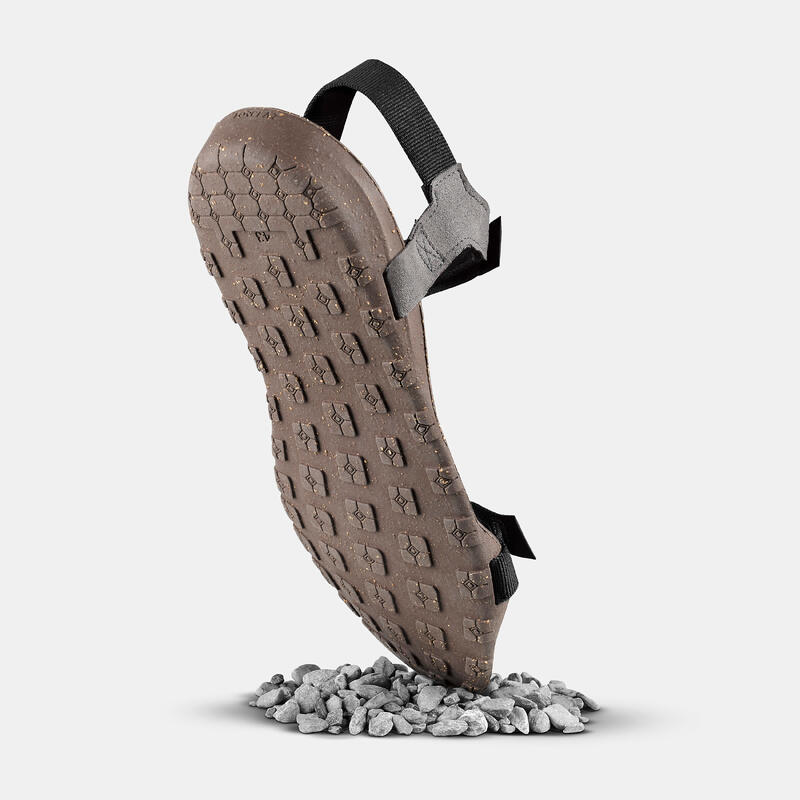
Xero Shoes Z-Trek are well-known ready-made barefoot sandals with a strap over the toes and a thin sole – the sporty option for those who want brand quality.
Who it’s for: you want durable ready-made barefoot sandals for hiking and running.
Heads up: this model is currently on clearance (check size availability).

Bosky Shoes Performance Z-TECH / Y-TECH 🇨🇿

Bosky Shoes Performance from a Czech company are the most durable option – Z-TECH with a strap over the toes holds the foot better on trails, Y-TECH with a toe post is more comfortable for everyday wear.
I tested both versions all summer and wear one pair daily. You’ll find a detailed comparison in my 📖 Bosky Shoes review with video.
💡 Tip: in my opinion, the ideal combo is one durable pair for everyday wear and one ultralight pair (DIY or foldable) as backup footwear in your backpack.
📖 How did it all start?
Once upon a time, I started running, read the book Born to Run and gradually learned more. That’s how I came to understand how the foot works and the downsides of regular shoes, in which you tend to land hard on your heel instead of cushioning the impact through the front of your foot.
Back then, though, the choice of barefoot footwear was small and everything was expensive. Things are better now, but it still seems too much to pay more than $45 for a piece of rubber and a strap. So after X attempts, this version was born.
❓ FAQ
How much do DIY barefoot sandals weigh?
A pair in size EU 40–41 with the Comfort sole weighs 140 g in total, with the Feel sole about 250 g.
How much does it cost to make barefoot sandals?
The materials come to about $21; the easiest way is to buy a ready-made kit.
Which strap is better – 2 cm or 2.5 cm?
A 2.5 cm strap holds the foot better and, in my opinion, looks better too. A narrower strap is a bit lighter.
Can you wear socks with barefoot sandals?
Yes – thanks to the strap over the toes (no toe post), you can wear socks with them without any problem.
📚 Related reading
🦶 Best barefoot sandals? Bosky Shoes review
Z-TECH vs Y-TECH and ultralight sandals – which to choose.

⛰️ GR221 Mallorca: a 4.5-day traverse
Got your sandals? Take them across the Serra de Tramuntana – map, water and tips.

🏕️ Best ultralight backpacking gear on a budget
How to save weight and money – what’s worth buying and what to make yourself.
👁️⃤ See you in the Temple of Nature! 🌄